Research Findings: Targeting Compartmentalized Inflammation in MS
Increasing evidence suggests that compartmentalized inflammation – a type of inflammation resulting from immune cells being trapped within the central nervous system – is a major mechanism in driving disability progression in multiple sclerosis (MS). Therefore, a better understanding of molecular processes underlying compartmentalized inflammation could lead to new therapies to stop disease progression as well as identify people with MS who are most likely to benefit from such therapies. This is what Dr. Jennifer Gommerman’s study set out to understand, findings that have now been published in the journal Nature Immunology, linked here. Read more here.
In some people with MS, aggregates of immune cells called Tertiary Lymphoid Tissues (TLT) have been found near areas of nerve fibre damage. The challenge is that these aggregates form within protective membranes around the brain, which is difficult to treat with current disease-modifying therapies.
Dr. Gommerman’s team developed a mouse model of MS (experimental autoimmune encephalomyelitis or EAE) that mimics TLT formation and they showed that treatment with remibrutinib, an experimental Bruton’s tyrosine kinase inhibitor (BTKi), reduced TLT formation and grey matter injury in the brain. Interestingly, they also discovered that the presence of TLT corresponded to measurable changes in specific protein markers (CXCL13:BAFF) in the cerebrospinal fluid of EAE mice as well as in people with MS.
These findings provide fundamental insights into the cellular mechanisms underlying compartmentalized inflammation in the brain, and how it can be targeted by therapies like BTKi. The study also offers a new way of identifying people living with MS who may be experiencing compartmentalized inflammation (by measuring CXCL13:BAFF levels) and would benefit most from personalized treatments.
*This research is funded in partnership with the National MS Society (US).
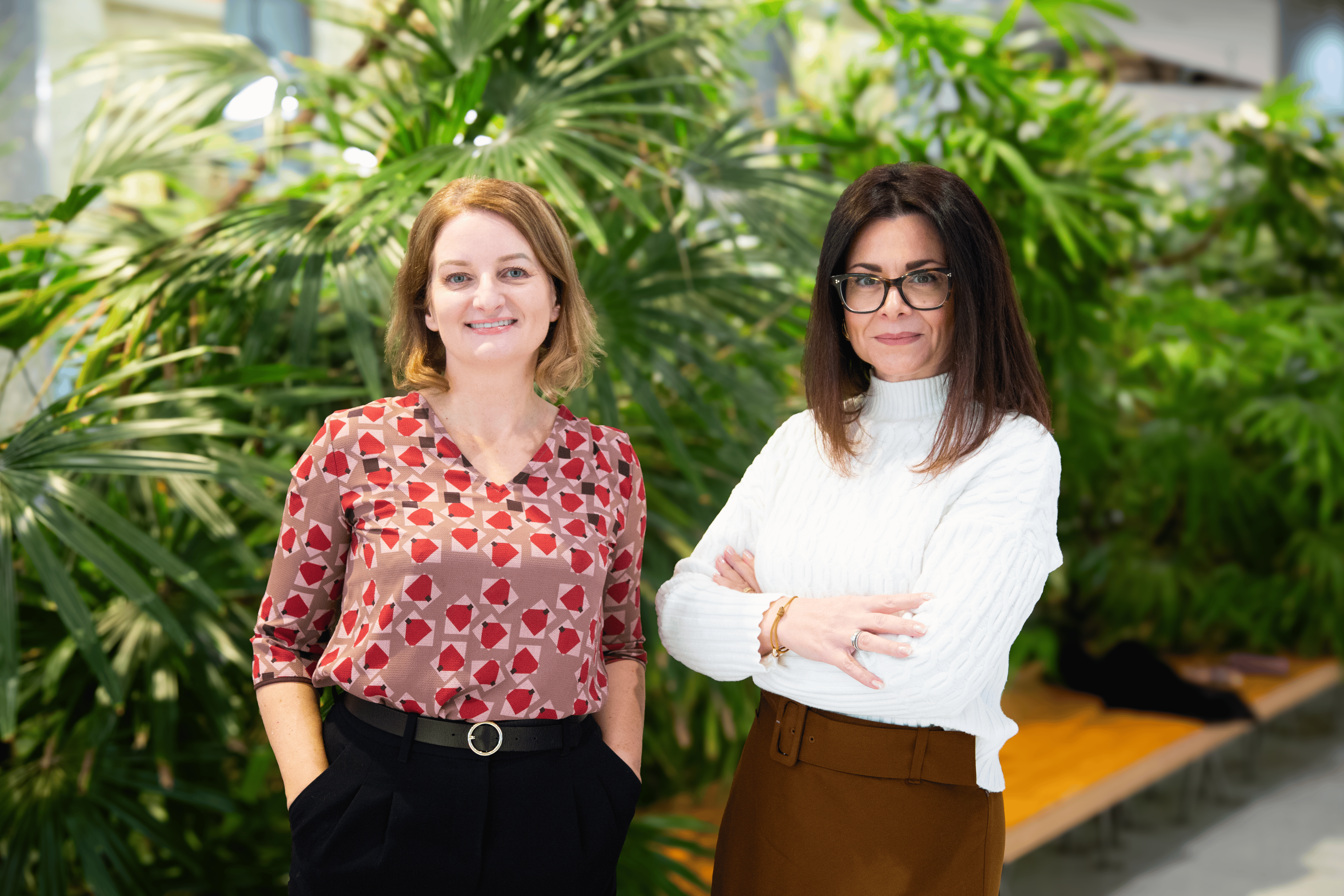
Dr. Jennifer Gommerman and Dr. Valeria Ramaglia
Image Courtesy of Julia Soudat