
What Is Driving the Cost of MS in Canada?
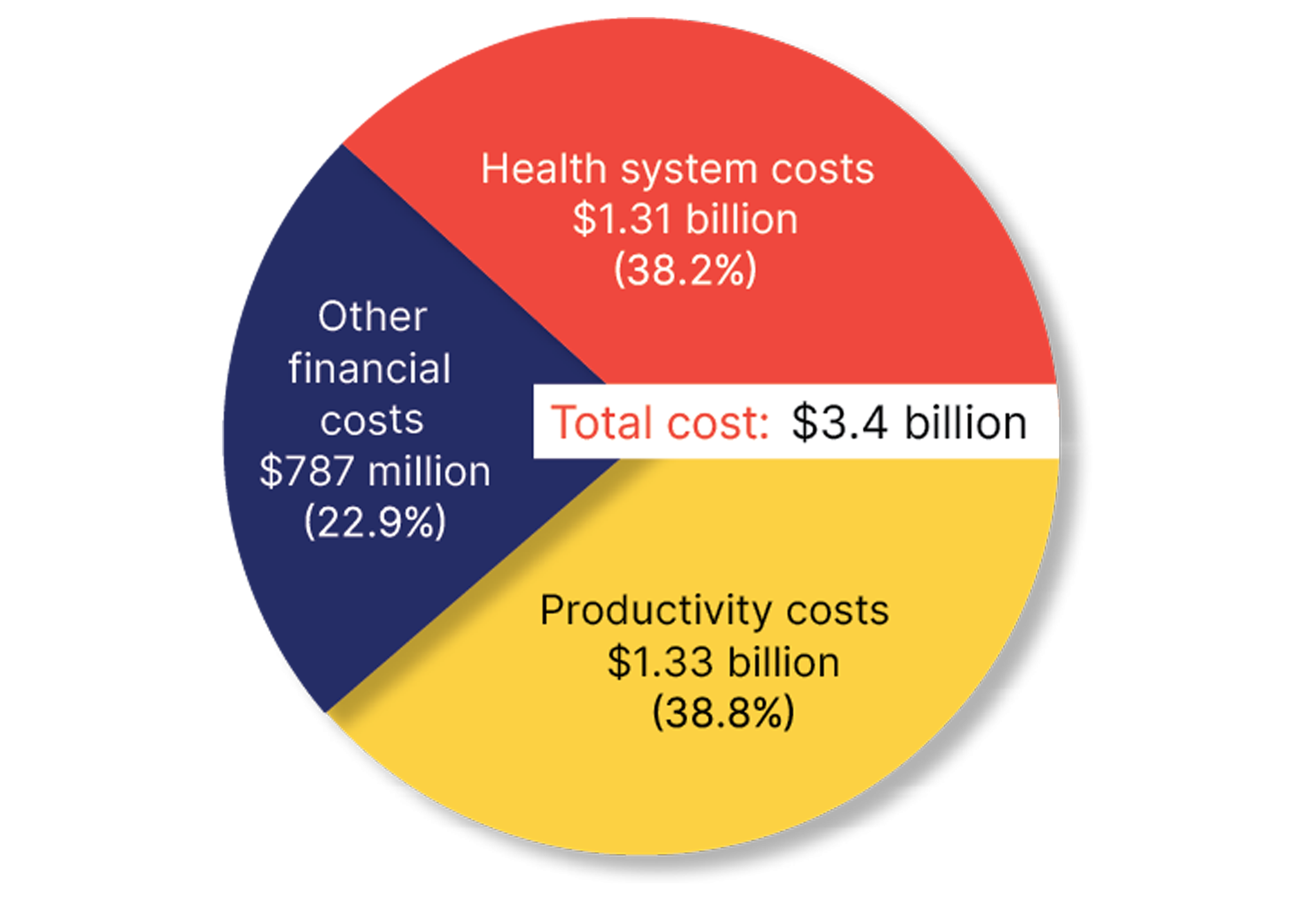
MS creates significant costs across health care, lost productivity, caregiving, and out-of-pocket expenses. The annual cost breakdown below illustrates the major drivers of MS-related economic burden in Canada.

- In a normal (non-disrupted) year, the annual cost of MS to Canada is significant, totalling more than $3.4 billion in direct health costs, productivity loss, and other financial costs.
- Productivity loss accounts for $1.3 billion of the cost of MS to Canada – that includes reduced employment, absenteeism, presenteeism, premature mortality, and informal care.
- The annual cost of MS per person is estimated at $42,880, much higher than other chronic diseases like diabetes and heart disease.
- Recent disruptions in Canada’s health care system caused delays in both MS diagnosis and MS treatment, resulting in worse outcomes for Canadians living with MS.
- Delayed diagnosis and disrupted treatment generated an additional $578.2 million in MS-related health system expenditure, productivity losses, and lost wellbeing between 2020 and 2024.
The Impact of Delayed MS Diagnosis and Treatment
Behind the economic data are real people affected by MS. Barb’s experience highlights how delays in diagnosis and treatment can affect daily life, health outcomes, and long-term costs.

“I know firsthand that time matters in MS. Delays in diagnosis meant living with uncertainty while my symptoms continued to affect my everyday life. Early treatment can make a real difference, and no one should have to wait for the care they need. Every delay is time when symptoms may worsen, disability can progress, and opportunities for effective treatment lessen. Early diagnosis and timely treatment can help protect brain health, preserve function, and change lives.”
Barb, diagnosed in 2011
How Can Canada Reduce the Cost of MS?
Research shows that earlier diagnosis, timely treatment, and appropriate support can improve outcomes and reduce long-term costs associated with MS.
Learn more: Read the full Cost of MS report
Canada has one of the highest rates of MS in the world. Addressing gaps in diagnosis, treatment access, and support services can improve outcomes for people affected by MS while reducing the economic burden of this disease.
