- From the Community
- September 11, 2025
Cycling Coast to Coast for MS
One Man’s Inspiring Journey to Raise $100,000 for the MS Community
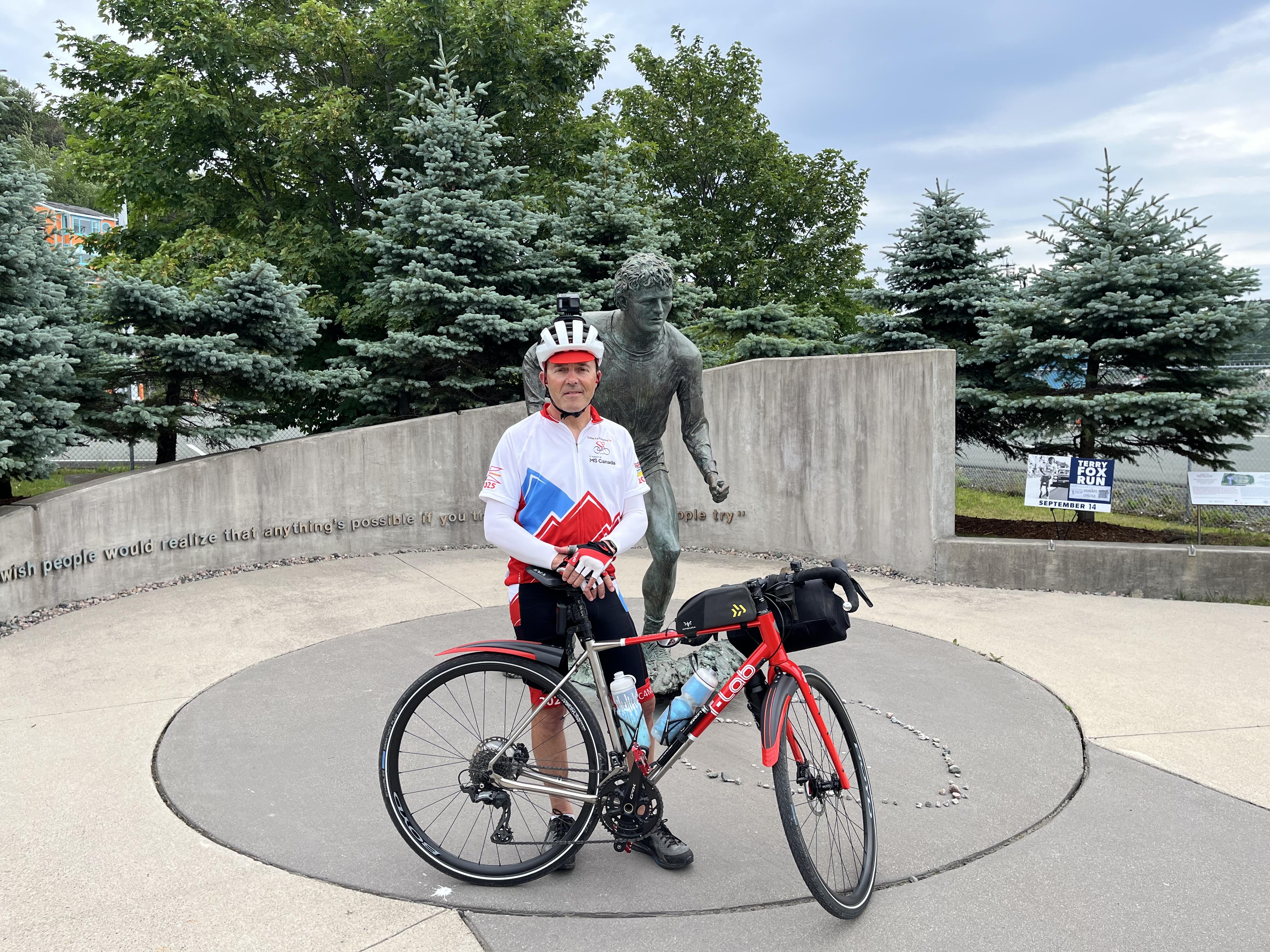
Marcel Lafontaine’s been riding in MS Bike events for eight years, and this year he took on the incredible challenge of cycling across Canada with a goal of raising $100,000 in support of Canadians affected by MS.
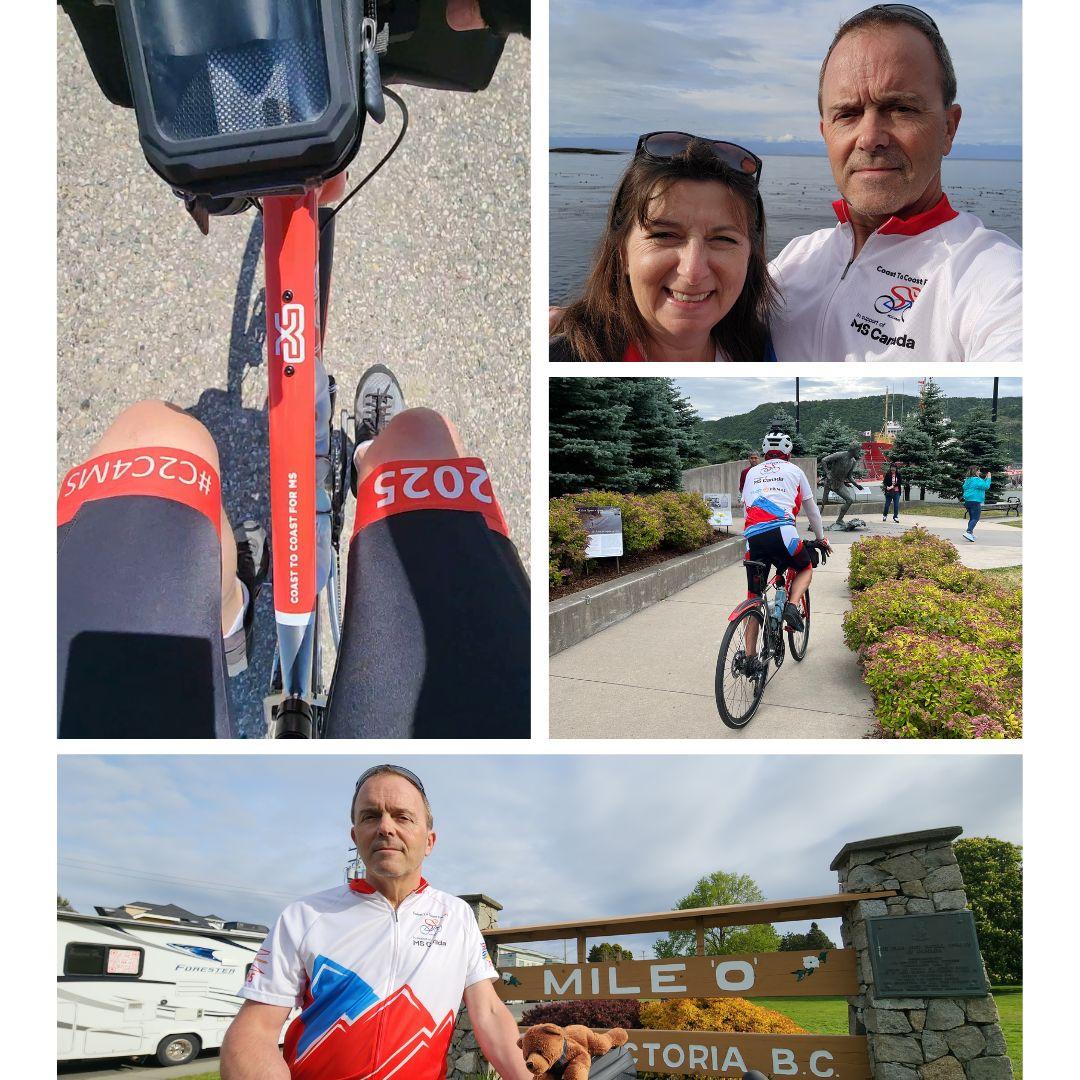
Marcel hit the road on May 11, starting in Victoria, British Columbia. He ended his inspiring cross-country ride in St. John’s, Newfoundland on July 25, in time to get back home to St. Albert, Ontario to take a little break from riding, and then hit the pavement again for MS Bike – Ottawa to Cornwall.
We connected with Marcel for a heartwarming Q&A where he shared how he got involved with MS Bike, what inspired him to ride across Canada, and how the cross-country trek went for him!
How did you get into cycling?
I’ve always loved cycling! As a young teenager, I often went on long-distance rides over 50kms.
What made you decide to ride in your first MS Bike event?
My brother-in-law’s workplace had a team in the Ottawa to Cornwall ride in 2017, and he asked me to join them. In all honesty, it was “just a ride” in the beginning. I wasn’t familiar with the event, but I quickly realized I was already connected to the MS community through friends and family living with MS, and that MS Bike was something I could do to support them and others living with the disease. The following year, I created my own team, The Spin Cycle!
Can you describe the feeling you have when you attend MS Bike? What stands out the most about the experience?
I enjoy the camaraderie and the feeling of satisfaction you get from doing good things for, and with, others. Year after year, I’m impressed with how organized and well supported the rides are. My wife, Joëlle, and I have volunteered a lot over the years, and I know and appreciate how much of an impact MS Canada volunteers and events like MS Bike make.
What inspired you to take on a cross-country ride in support of the MS community?
Not what, but who! I met Jonathan Allenger, a fellow MS Bike participant who lives with MS. He did his own ride across Canada in 2023, and after hearing him talk about what led him to take on the challenge, it struck a chord with me. He had asked himself, “What more can I do?” and I couldn’t help but ask myself the same question. The idea of riding across Canada on my bike had already been on my mind for quite some time, but this would give it a meaningful purpose, and I knew it was something I could do.
How did you prepare for the challenge of riding coast to coast?
The first (and most important) step was getting Joëlle’s nod of approval, as this was something I couldn’t and wouldn’t want to do on my own! She was supportive and ready to join me out on the road by driving our RV, not riding alongside me on a bike!
From a physical aspect, I spent a bunch of time riding my bike last summer and a whole lot of time on Zwift (4,000km, including lots of climbing) through the winter months! I also requested four months of leave without pay (LWOP) from my employer. It’s much more than I should need, but since I’m only allowed one request for LWOP in my career, I wanted to make sure I gave myself plenty of time in case something went sideways, or we decided to take some actual vacation time along the way.
How did you manage food, shelter, and bike repairs (if needed) along the route?
I was fortunate to have the RV, our home on wheels, for the duration of the trip. It was always there at the ready. Despite being a little small, it had all the creature comforts of home.
As for bike repairs, I brought a second bike as a backup in case something happened with my main one. I was able to get some emergency repairs done on the fly when I was riding through Canmore, Alberta, but I did have to put my #2 into action in rural Saskatchewan when my front tire literally tore open. I managed to get it replaced in Moose Jaw, but they weren’t able to do some other repairs that were needed. The bike held out until Regina, where a local shop, Western Cycles (which luckily is open on Sundays!), took it at the last minute and even allowed us to stay overnight in their parking lot.
What did a typical day on the road look like?
I tried to be on the road by 8am. My “support crew” (aka my wife, Joëlle) typically hung back wherever we were parked the night before, until I logged about 10km (she saw my location using the Strava app). Then she’d find a spot 20km to 30km down the road, where I’d meet her for a quick break, stretch, and snack. We’d tag up like that until we reached our final destination for the day.
Depending on the weather, road conditions, and availability of spots to park for the night, I aimed for approximately 120km of riding per day.
What was the most challenging aspect of the journey?
The lack of paved shoulders or shoulders that are in bad shape and in need of repair. It’s physically and mentally taxing when you have long stretches like that. You have to choose between holding your ground on the white line or moving off to the side, which is often loose gravel and sometimes not at the same height as the paved road surface.
There was a stretch near Saint-Louis-du-Ha!-Ha!, QC, that was one of the hardest things I’ve ever had to do physically. While I was riding, I saw a sign saying the trail was closed several kms further down. Google Maps showed other options for when I got to the closure, so I kept going. When I arrived, not only was the trail closed, so was the main road beside it. My only option at that point was a 14km detour around the area. After a couple kms, the unpaved road turned into a gravel road, which then turned into an unmaintained road, and then I was met with long stretches of big, loose rocks, washed out areas, and many hills I had to walk. It was hot and muggy, and the horseflies were out in full force! It was definitely the low point of the entire ride, but I got through it.
What motivated you to keep riding on tough days?
I’m healthy, I had a roof over my head, a warm and dry place to sleep every night, and food to eat. I didn’t take any of that for granted, so I had no right to complain or quit!
I also had a constant reminder of my commitment to getting this done, right in front of me on the top tube of my bike. Since it was a custom build, I had “Coast to Coast for MS” painted there. Every time I looked down, I was reminded of what I was doing and who I was doing it for.
Was the cross-country journey harder or easier than you thought it would be?
I’m honestly surprised at how resilient my body was. By no means was it easy, but physically, I expected it to be harder than it was. It was the mental aspect that ended up being tougher than I thought. I had little discussions with myself from time to time, and like I said, I focused on what I was doing and who I was doing it for. I know it’s cliché, but it truly is mind over matter sometimes.
What kind of support did you receive along the way?
We were in constant contact with friends and family, and I got lots of support and encouragement on Coast to Coast for MS’ Facebook and Instagram accounts. I’m fortunate to be surrounded by a lot of generous and supportive people, and I thanked every one of them personally.
Joëlle tried to keep the RV as visible as possible whenever we were parked, as it was decked out with my Coast to Coast for MS logo and big QR codes that brought you to my donation page. It led to many people questioning what we were doing, great conversations about the cause, and several on-the-spot donations!
How does it feel to know you’re making an impact on the MS community?
MS is a cause near and dear to my heart. It means a lot to me to raise awareness and fundraise in support of the MS community. On average, 12 Canadians are diagnosed with MS every day. I’m hopeful fundraising efforts like my ride and other events and initiatives will lead to a cure someday. That would be the ultimate impact!
Jonathan Allenger’s Coast to Coast ride inspired me to take on this challenge and maybe my story will inspire others to do the same.
What advice would you give someone who’s thinking about taking on a coast-to-coast ride?
There are a lot of things to consider, so give yourself plenty of time to plan ahead! Get as much advice as possible from people who have done it before, and make sure to get those legs (and butt) ready! Your physical and mental health need to be your primary concern along the way, so definitely make them a priority.
How did you celebrate after you finished your ride?
The first thing I did when I hopped off my bike was give Joëlle a high-five and kiss and simply said, ‘I’m done!’ We went out for dinner in St. John's before settling in for the night.
Looking back, is there anything you would do differently?
Though it may seem a little odd, I think I would add racks and panniers (bags that attach to the rack) to my bike to make it look like I was doing a solo (i.e. unsupported ride across the country). Once I met and rode with a few of the other cross-Canada riders I caught up to along the way, I quickly realized how much more attention they got whenever they stopped somewhere. I guess I just looked like another cyclist out for a little ride! Nevertheless, the QR code and Coast to Coast for MS Logo on the RV and on my jersey did draw several people in!
More Stories You May Like
- Log in to post comments