- From the Community
- February 5, 2026
Janelle’s Story of Self-Advocacy and Resilience
MS looks different for everyone. It doesn’t discriminate. Age, gender, ethnicity—anyone can be diagnosed. Despite this, Black people living with MS aren’t always taken seriously and their symptoms are sometimes dismissed or overlooked.
Janelle shares her experience as a Black woman living with MS, the importance of representation, and how she learned to advocate for herself.
“When I went to my doctor with my initial MS symptoms, he gave me the impression that he thought it was all in my head. The extreme tingly sensation I was experiencing, my inability to run, and the feeling that I was unable to move were overlooked until he saw my first MRI.

To some doctors, if you’re Black and a first generation Canadian, MS gets defined as a disease that you couldn’t possibly have. They believe that my parents, who are from Barbados, had enough vitamin D, which means I should too. The reality is, my mom moved to Canada when she was 10 years old and we didn’t go back to Barbados as much as I would have liked when I was growing up.
As a person of colour, I have an enormous amount of respect for my ancestors, including the struggles they faced and the barriers they had to break through. My great-grandmother knew how to read, and my great-grandfather used to work in the sugar cane fields. They were advocates for their children and grandchildren. I’m determined to create a legacy for my two children, and I want to show them that despite hardships, like I sometimes experience while living with MS, they can do anything they put their mind to.
That’s one of the reasons I think it’s so important to show that this disease can affect anyone, regardless of their sex or skin colour.
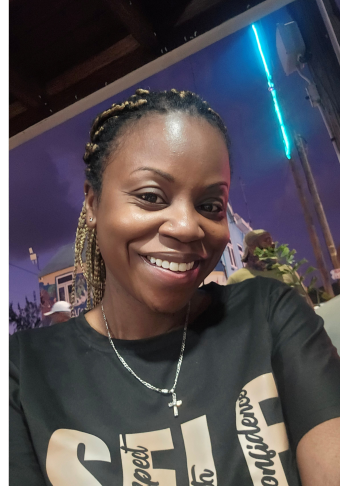
One of the largest obstacles of living with MS as a Black woman is having to explain to your doctors that you want to advocate for your own health. Sometimes the road they want you to go on isn’t for you. I want to live for myself, as well as my children, without having someone dictate for me.
After living with MS for several years, I finally feel like I have more of a voice when it comes to making decisions about my health. I now ask my doctors to explain why they want me to take a particular medication, and why we can’t try something more holistic. I want to be involved in every decision that’s made about my body.
If you feel like you don’t have a loud voice when making decisions about your health, find a person you trust who will advocate for you. Fight for the lifestyle you want because you are not MS, MS is something that you have.”
Stories like Janelle’s remind us why representation matters, and Black History Month gives us the opportunity to lift up voices that enrich our community every day of the year.
More Stories You May Like

- Log in to post comments