- From the Community
- September 18, 2026
Rewriting the Story: Jason’s Journey With MS
“I think if something bad happens in your life, you have to find a way to keep going to give meaning to what you’ve been through.”
Jason was diagnosed with MS in 2007, but his journey began years earlier.
His first symptoms appeared in 2005, when he had a painful episode of optic neuritis, followed by a severe headache. “I felt a really profound pain when I moved my eyes from left to right. When my headache resolved, I noticed a blur around my central field of vision, which was terrifying,” Jason remembered. “After recurring vison loss and numbness in my feet and back, I went to a walk-in clinic and that’s when a nurse asked me if anyone in my family lived with MS.”
The nurse scheduled an MRI for the following day, and that’s what led to Jason’s MS diagnosis.
His symptoms remained stable for several years, but everything changed in 2018 after experiencing complications.
“One night I walked up a flight of stairs to go to sleep, and the next morning I couldn’t move my arms or legs.”
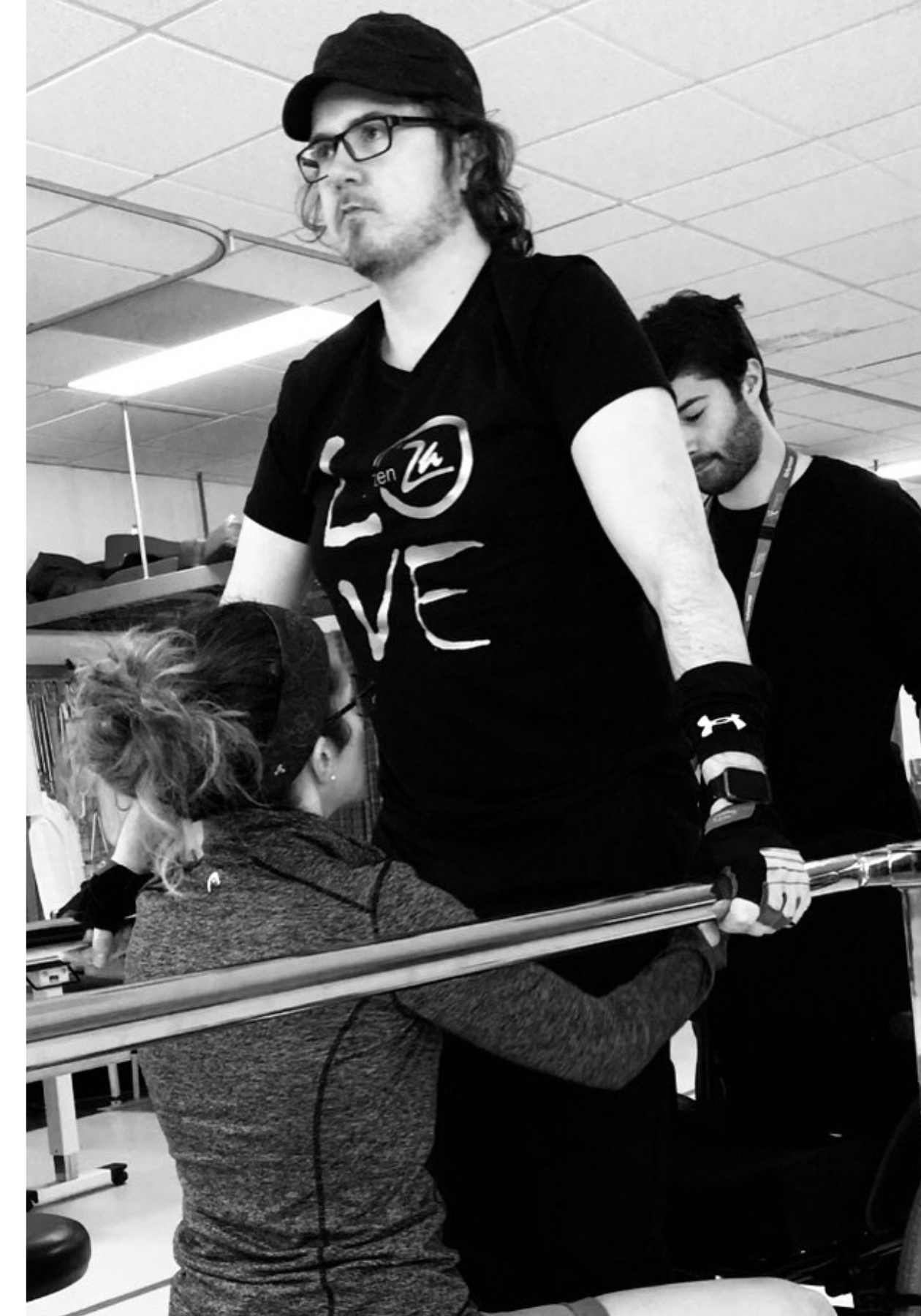
After spending two months in the hospital, three months in rehabilitation, and ongoing outpatient therapy, he slowly regained the ability to use his arms and hands. While he now has the strength to stand, he uses a wheelchair to help get around.
The inflammation in Jason’s brain impacted more than just the use of his legs—it also temporarily changed his personality. “One of my biggest concerns when I was in the hospital was whether or not my brain would be okay,” Jason said. “I kept thinking, ‘What if all my thoughts and memories are gone?’”
For Jason, writing his memoir about his experience became his ladder back to himself. While working on his book in the hospital, his mind became clearer. Over time, his personality returned and he began to feel like himself again. One passion that kept him motivated was his love for filmmaking.
From a young age, Jason was passionate about writing and films. “I’ve been obsessed with writing stories since I was a kid, and my love of movies began when I was about four years old when my parents took me to see E.T. for the first time” Jason reflected.
At the time of his hospitalization, Jason was working on his latest feature film, INTERVAL. He paused production while in the hospital, but picked it back up in 2021. As Jason wasn’t able to physically operate a traditional camera like he had before, his creative partner, Edward, designed an accessible camera system centered around an iPad. This adaptive technology was created to allow Jason to frame shots and direct scenes remotely without compromising his creative vision. “Accessibility isn’t really a word associated with filmmaking,” Jason admitted, “So with this innovative technology, I can control the camera as I always have, but without the physical struggle that comes with it now.”
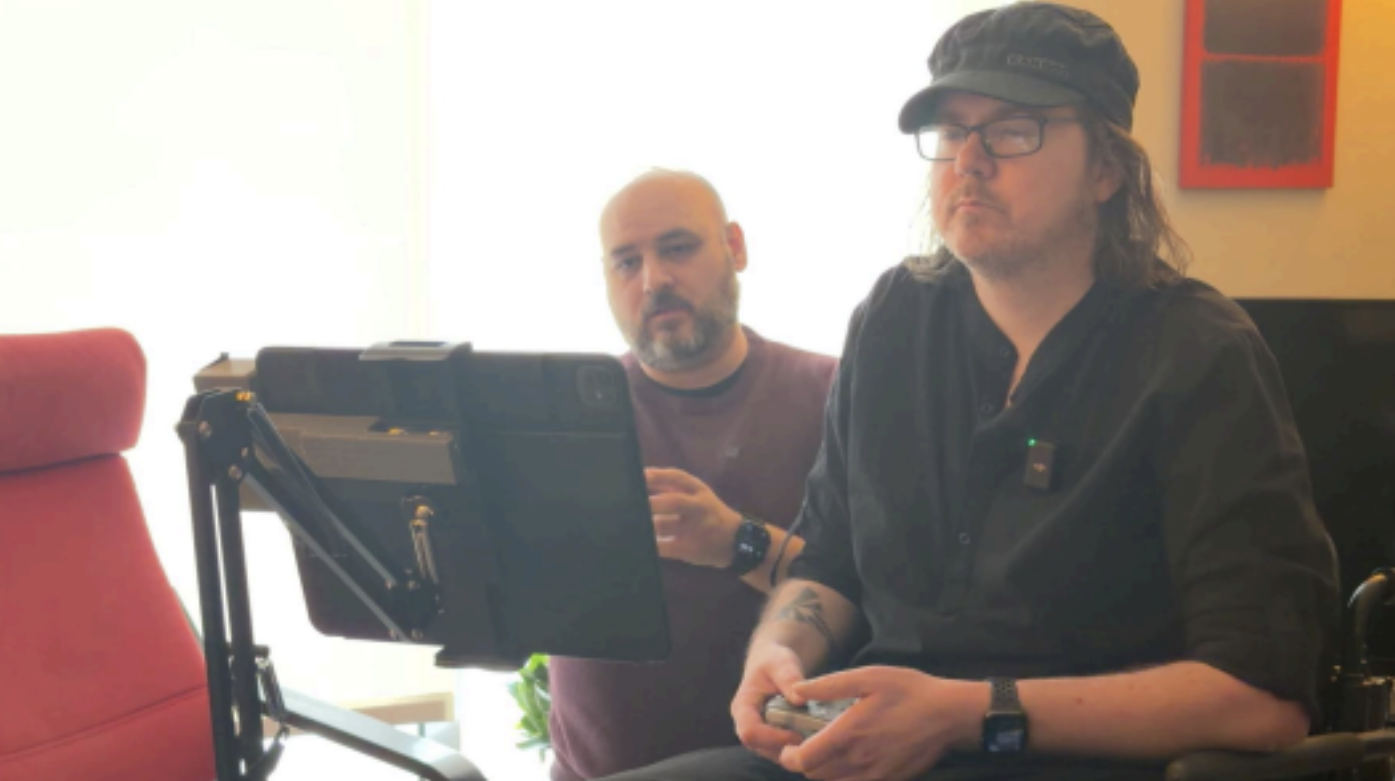
He says completing his film is his main source of motivation throughout his MS journey.
“It means everything to me. The fact that I survived what happened to me and I still get to create this film, I can’t waste that gift.”
Living with MS has taught Jason that adaptation is a constant process, as every day looks different. Some days, he still wakes up with his hands clenched into fists. After contracting COVID-19 in 2023, his muscle spasticity became significantly worse, and his symptoms continue to change. “I describe it as if I’m learning to play the piano and I’m getting really good at it. Then, I wake up one morning, and someone has replaced the piano with a violin and now I have to learn to play a completely new instrument,” explained Jason. “The frustration with my body will never go away, but what I can do is work with it the best I can” he shared.
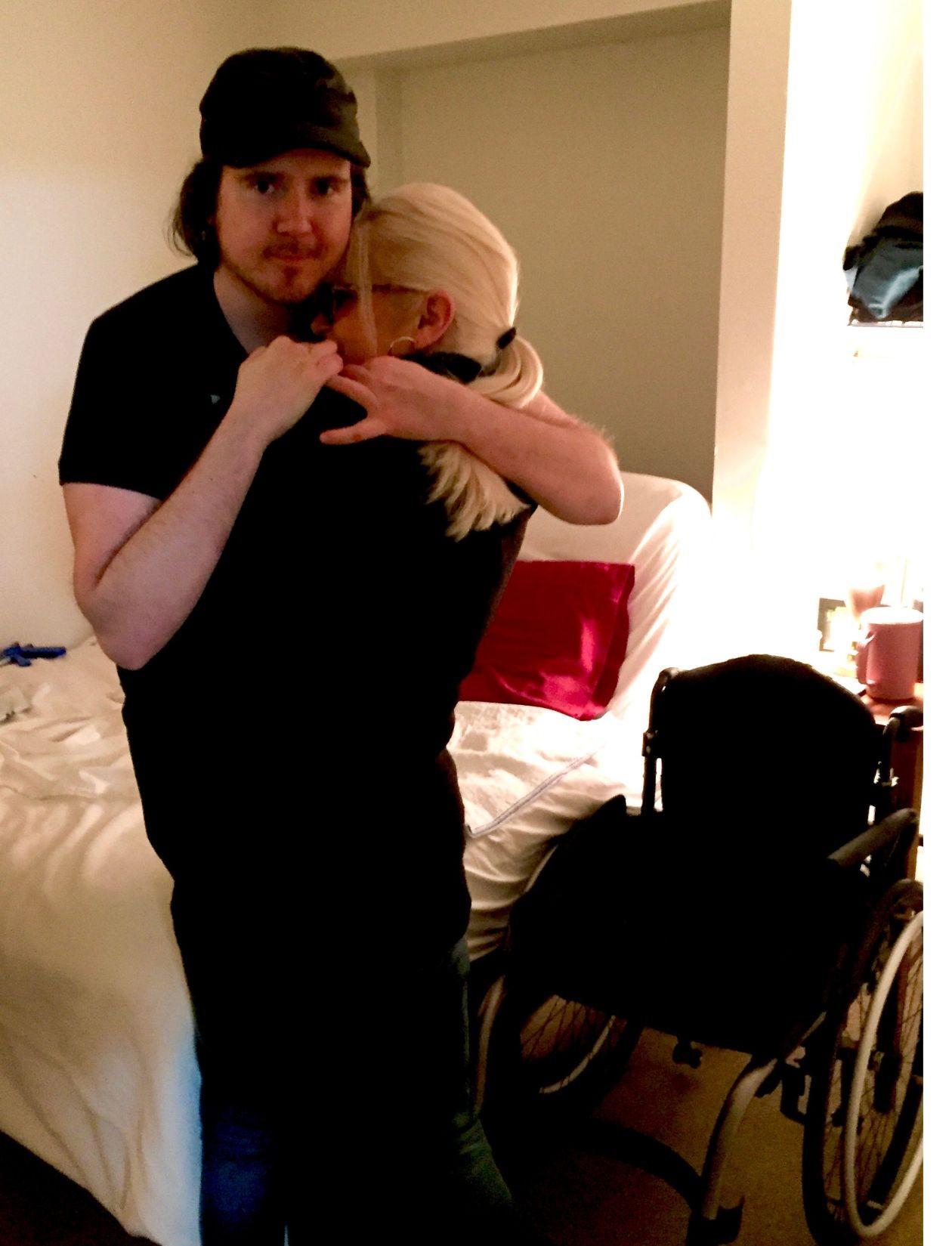
Jason’s grateful to have a strong support system in his corner. “While my life is incredibly difficult at times, I’m surrounded by amazing people,” he said, “I’m very lucky. I’ve got PSWs that help me and my mother is my biggest cheerleader still to this day.” When he was in the hospital, Jason’s mother was the first person he recognized. “There’s no way I would be here without her.”
For people that are newly diagnosed with MS, Jason offers an encouraging piece of advice. “It’s okay to let yourself be scared. It doesn’t mean you’re weak; it means you care. Know that you’re worth facing this and let me be an example that stubbornness isn’t always a bad thing.”

- Log in to post comments