Dr. Kei Masani
Senior Scientist, University Health Network & Associate Professor, University of Toronto
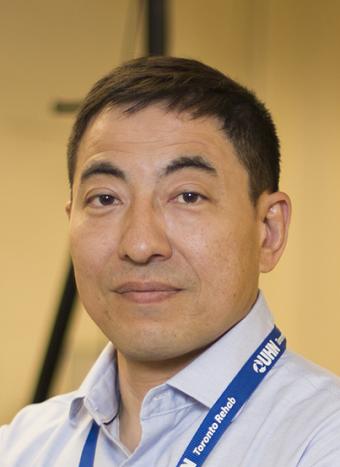
Dr. Kei Masani is a Senior Scientist at the KITE Research Institute – University Health Network and an Associate Professor at the Institute of Biomedical Engineering, University of Toronto. His research broadly aims to improve mobility in individuals with neurological impairments, including those with multiple sclerosis (MS).
Dr. Masani approaches human movement from a neuromechanical perspective, integrating neurophysiology with physics to understand and enhance motor control. His research focuses on developing accurate assessment methods and therapeutic interventions using functional electrical stimulation to support standing, walking, and adapted exercise. He also leads projects investigating balance control and neuroplasticity through stimulation-based therapies.
Dr. Masani’s areas of expertise include human biomechanics, neurophysiology, and rehabilitation engineering. He has a strong background in the quantitative evaluation of movement and the development of stimulation technologies for motor recovery. His work is highly translational, with a focus on both basic neurophysiological mechanisms and practical clinical applications.
He holds a B.Sc. and M.Sc. in Physical Education, and a Ph.D. in Physical and Health Education, all from the University of Tokyo. Since transitioning into biomedical engineering, Dr. Masani has collaborated extensively with clinicians, engineers, and rehabilitation scientists to bridge the gap between laboratory findings and patient care.
What is the focus of your research? How did you become interested in MS research?
Falls are a critical issue for people with spinal cord injury (SCI), significantly impacting independence and quality of life. My research focuses on developing a novel therapy using functional electrical stimulation (FES) to improve upright balance and reduce fall risk in individuals with neurological impairments. We have demonstrated that this FES-based therapy can enhance standing balance by promoting neural circuitry reorganization in people with SCI.
We have also tested this therapy in individuals recovering from stroke, and observed similarly positive outcomes in balance improvement and neural adaptation. Given the shared mechanisms of balance impairment across neurological conditions, we believe this therapy holds strong potential for people living with MS as well.
This translational potential — the opportunity to extend the benefits of our work to a broader population — sparked my interest in MS research and continues to motivate my efforts in this field.
What inspires you to continue advancing research in this field?
I am deeply committed to translating lab-based research into practical therapies that can improve people’s lives. FES and other neuromodulation techniques have great potential to enhance neural circuitry and motor function. However, they remain underused in clinical settings, largely due to the complexity and cost of current systems.
This gap between research and clinical application drives my work. I am focused on developing user-friendly, low-cost stimulation devices that maintain therapeutic effectiveness while being accessible and practical for everyday use. My primary research has centered on individuals with SCI, but I am confident that these same approaches can benefit people with MS, who face similar challenges with balance and mobility.
It’s this opportunity to make cutting-edge therapies more available — and to have a tangible impact on mobility and independence — that continues to inspire me.
How do you hope to change the lives of people living with MS through your research?
This research aims to evaluate whether the therapy we have developed for individuals with SCI can offer similar benefits to people living with MS. If effective, this approach could significantly improve upright balance in individuals with MS by enhancing neural control mechanisms through FES.
Our goal is to move beyond the lab and make this therapy accessible in community settings. By doing so, we hope to reduce the risk of falls in daily life — a major concern for many people with MS. This can lead to greater independence and improved quality of life.
We also believe this method has the potential to be more efficient than currently available interventions, offering faster and more substantial improvements in motor function.
What do you enjoy most about your research? What are some of the challenges you face?
We have spent over a decade developing this novel therapy, building it from basic scientific principles into a system that can be used in real-world rehabilitation settings. The journey has come with many challenges, including technical hurdles and regulatory barriers, especially when trying to translate lab-based research into something practical and accessible.
What I enjoy most is seeing the therapy in action — when people with SCI or stroke participate in our research projects and show real improvement in their balance and mobility. Their feedback is incredibly motivating. Many participants tell us they enjoy the therapy and wish they could continue beyond the study period. Knowing that they see value in what we’ve developed — and that it’s making a difference — brings me a great deal of joy and reaffirms why I do this work.
How important is the support from MS Canada in your research?
The support from MS Canada plays a critical role in advancing my research into therapies for people living with MS. This pilot project would not be possible without their funding. It allows us to test the applicability of a promising intervention, originally developed for other neurological conditions, in the MS population for the first time.
This early-stage support is essential for generating the evidence needed to move the research forward. With the results from this study, we will be in a strong position to apply for larger-scale funding and take the next steps toward clinical implementation.
Ultimately, MS Canada’s support helps bridge the gap between research and real-world impact, bringing us closer to making this therapy