Dr. Manav V. Vyas
Assistant Professor, University of Toronto & Neurologist, St. Michael’s Hospital
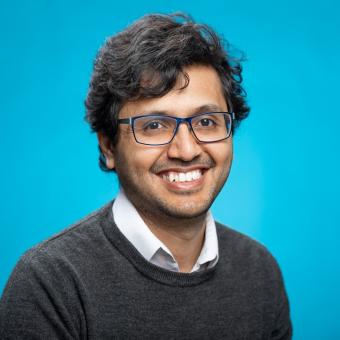
Dr. Manav V. Vyas is a neurologist and scientist at St. Michael’s Hospital-Unity Health Toronto, an assistant professor in the Division of Neurology, Department of Medicine at the University of Toronto, and an adjunct scientist at ICES, Toronto. He trained at Gujarat University (Medicine, MBBS), Western University (MSc in Epidemiology and Biostatistics), and the University of Toronto (Neurology & PhD in Clinical Epidemiology). His research focuses on mitigating the impact of social determinants of health on brain and cardiovascular health. He teaches at the Institute of Health Policy, Management and Evaluation, and mentors high school, undergraduate, graduate, and clinical trainees through the various mentorship programs at the University of Toronto.
What is the focus of your research? How did you become interested in MS research?
My research focuses on how social identities influence the incidence, care, and outcomes of neurological disorders and to mitigate its negative consequences. During my residency, I worked with Dr. Liesly Lee in multiple sclerosis (MS) clinics at Sunnybrook Hospital in Toronto and participated in related research. After advanced training in clinical epidemiology, I joined St. Michael’s Hospital-Unity Health Toronto, home to one of Canada’s largest MS clinics, serving Toronto’s marginalized inner-city population. These experiences shaped my focus on MS research.
What inspires you to continue advancing research in this field?
Neuroscience and neurology have long focused on disease mechanisms and treatments, but cures may not be possible for all conditions, at least not in the near future. We now know that people’s social identities can influence their healthcare experiences. I am driven to advance research on social determinants of brain health to improve patients' lives and ensure their condition does not become a social identity that hinders their healthcare experiences. My patients and my extremely talented colleagues inspire me to continue to advance the research in this field.
How do you hope to change the lives of people living with MS through your research?
I strive to improve research methods to better address key questions. By doing so, we can gain better understanding of commonly occurring phenomenon. MS is unique, with both relapsing-remitting and progressive neurodegenerative aspects, often affecting patients during critical life stages. I hope my work drives innovation for equitable MS care by uncovering existing barriers faced by people living with MS.
What do you enjoy most about your research? What are some of the challenges you face?
I enjoy observing a phenomenon and exploring why it occurs, how it can be improved, and its impact on patient care. Along the way, I collaborate with a brilliant team of researchers and trainees who refine our questions and methods to develop innovative solutions.
Much of my work focuses on studying the role of social factors in MS incidence and care. Unlike other risk factors, these factors cannot be eliminated solely through medical interventions, making stakeholder engagement essential to improving MS care processes. This becomes challenging depending on the engagement and motivation of various stakeholders. MS Canada serves as an excellent point of contact for patients and caregivers and researchers and other stakeholders to bridge this gap.
How important is the support from MS Canada in your research?
The support from MS Canada is critical because the funding will propel our work on understanding the role of people’s social identities on the care and outcomes they receive. It will lead to meaningful clinical and policy recommendations that can help provide equitable access and care to all patients with MS, in turn improving their outcomes and quality of life.