Dr. Samira Ghorbani
Assistant Professor, University of Toronto
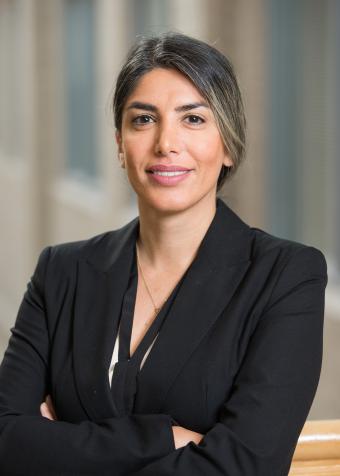
Dr. Ghorbani earned her Ph.D. in Immunology from Tehran University of Medical Sciences, where she studied the role of microRNAs in pathogenesis of multiple sclerosis (MS). Following her doctoral studies, Dr. Ghorbani pursued a postdoctoral fellowship at the University of Calgary under the mentorship of Dr. Wee Yong. Her postdoctoral research focused on strategies to overcome inhibitory factors in MS lesions to promote myelin repair.
Dr. Ghorbani is an Assistant Professor at the University of Toronto and a Tier 2 Canada Research Chair in myelin repair and matrix biology of aging. Her research program explores why the brain’s capacity for myelin repair declines with age. This loss of regenerative ability plays a significant role in the transition from relapsing to progressive MS. Her lab is particularly interested in the contributions of telomere shortening, cellular senescence and changes in the extracellular matrix (ECM) to impaired remyelination during aging. Dr. Ghorbani and team use a combination of mouse models, immunohistochemistry, flow cytometry, molecular biology, cell culture, and single-cell RNA sequencing to study how these factors affect the function of oligodendrocyte precursor cells (OPCs), which are essential for myelin repair.
Dr. Ghorbani’s aim is to identify therapeutic targets that rejuvenate the aging central nervous system and restore its regenerative capacity, thereby enhancing remyelination and slowing MS progression. Beyond basic research, she is committed to training the next generation of scientists through inclusive mentorship and collaborative learning.
What is the focus of your research? How did you become interested in MS research?
My research focuses on understanding why myelin repair slows down with age and how this contributes to MS progression. I became interested in MS during my master’s studies in immunology, when I first realized how complex its pathogenesis is and how much remains unknown.
What inspires you to continue advancing research in this field?
What keeps me motivated is the unmet need in progressive MS, where treatment options are still very limited. Knowing that many patients face gradual disability with few therapeutic options drives me to better understand the underlying mechanisms of MS progression. It is difficult to see how little we can offer when the disease moves beyond inflammation into the progressive phase.
How do you hope to change the lives of people living with MS through your research?
The hope that our work might one day help slow down MS progression by improving myelin repair is what continues to push me forward.
What do you enjoy most about your research? What are some of the challenges you face?
What I enjoy most about our research is the potential to make a difference in how we understand and treat progressive MS. The idea that our work could one day lead to therapeutics is motivating. One of the biggest challenges is the complexity of MS itself. The disease affects each person differently, and its progression involves so many unknown biological processes.
How important is the support from MS Canada in your research?
The support from MS Canada is extremely important to my lab as an early career researcher; it is actually the first grant I have received as a Principle Investigator (PI). MS Canada has always been supportive of my work, first during my postdoctoral training, and now as a PI. Their support not only provides essential funding but also brings researchers together, creating opportunities for us to collaborate and learn from one another. It also gives us a chance to interact with people living with MS, which is incredibly meaningful, as it reminds us why we do this work and keeps us focused on finding real solutions that can improve their lives.