Dr. Soheila Karimi
Full Professor
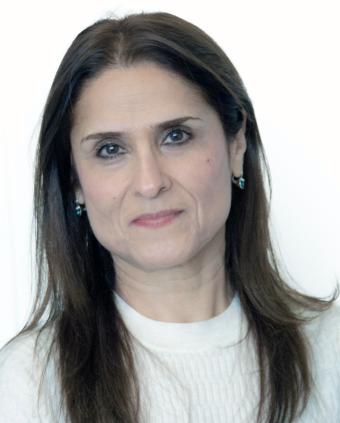
Dr. Soheila Karimi is a Full Professor in the Department of Physiology and Pathophysiology in the Rady Faculty of Health Sciences, at the University of Manitoba and the Founding Director of the Manitoba Multiple Sclerosis Research Centre. She has had a long-term interest in neural regeneration and stem cell research with a focus on therapeutic development for multiple sclerosis and spinal cord injury.
Dr. Karimi received her PhD in neurosciences from the University of Saskatchewan in 2001, followed by a postdoctoral fellowship at the Toronto Western Research Institute and the University of Toronto. During her training, she received numerous research awards and distinctions including fellowships from the Canadian Institute of Health Research (CIHR), the Heart and Stroke Foundation of Canada and the Ontario Neurotrauma Foundation, and the prestigious Synthes Award from the American Association of Neurological Surgeons.
In 2007, Dr. Karimi joined the University of Toronto as an Assistant Professor until 2010 when she moved to the University of Manitoba. Karimi’s program contributes to both basic and applied regenerative medicine discoveries. Her research is currently directed towards uncovering molecular mechanisms of demyelination and the role of neural stem cells, glia and neuroinflammation in myelin repair using preclinical and genetic models. Her team utilizes the gained knowledge to develop new pharmacological and stem cell-based therapies for multiple sclerosis and spinal cord injury. A major focus of Karimi’s laboratory is developing regenerative treatments for progressive MS, which is a critical gap in the field. Karimi’s program has been supported continuously and concurrently by the CIHR and MS Canada in addition to several other national and international agencies.
Dr. Karimi is also actively involved in leadership programs to serve the neuroscience community. She currently serves in the Board of Directors of the Canadian Association for Neuroscience (CAN), the Executive Committee of the International Women in Multiple Sclerosis (iWiMS), and the Scientific Advisory Board of the International Neurotrauma Society (INTS), in addition to several peer-review committees and editorial boards. Dr. Karimi is highly engaged in outreach, fundraising and public events in Manitoba and Canada. She has participated in the endMS Scholar Program for Researchers In Training (SPRINT) as a mentor and has hosted the 2024 endMS Summer School in Manitoba. In 2020, Dr. Karimi was named one of the Canada's Top 100 Most Powerful Women by Women Executive Network and received the Manulife Award in Science and Technology.
What is the focus of your research? How did you become interested in MS research?
From the early stage of my undergraduate studies, I was fascinated by the complexity of the central nervous system and the limited capacity of the brain and spinal cord for repair. This interest grew over time and drove me to pursue my doctoral studies in neurosciences. During my training, I developed an interest towards translational research and decided to build my career on therapeutic development for neurological disorders to make a difference for individuals affected by these devastating conditions. I chose MS research as I was interested in myelin biology and repair. My research has focused on how damaged myelin can be restored at various stages of MS, and how neural stem cells can be directed to support myelin repair in MS in particular the progressive phase of the disease when repair declines.
What inspires you to continue advancing research in this field?
The difference that we can make in the life of people living with MS is the most rewarding aspect of our research. It is now recognized that MS can be only beaten by research. Thus, the feeling that our research efforts may find a treatment for MS is priceless and motivates my team and I to work hard every day towards the collective goal of finding a cure for MS in our lifetime.
How do you hope to change the lives of people living with MS through your research?
By the support of MS Canada over the past several years, my lab has identified a promising candidate with high therapeutic potential for both relapsing remitting and progressive MS. This candidate treatment has shown remarkable effects in promoting myelin repair and cognition recovery in animal models of progressive MS. We also have strong evidence suggesting that this candidate can serve as an early disease marker. We are very excited about our new findings and are working hard to pave the path for translating these discoveries into clinical testing.
What do you enjoy most about your research? What are some of the challenges you face?
I enjoy the mentorship aspect of my research, which is important to train the next generation of MS researchers. I also enjoy interacting with people with MS and learning from their experience. This has guided our research and has been a source of inspiration. Although MS research is inherently challenging as it requires extensive efforts, it is rewarding that makes the challenges worthwhile.
How important is the support from MS Canada in your research?
The continued support of MS Canada has been extremely important to initiate MS research in my laboratory. We have made great strides in therapeutic development for MS that would have not been possible without the efforts of MS Canada in providing operational funds and trainee stipend support.