- From the Community
- October 28, 2026
Against Every Expectation: Carol’s Inspiring Journey With MS
At 51, Carol competed at her first Paralympic Games. At 60, she competed at her last.
Along the way, she became a Paralympic medallist and world champion para cyclist, racing alongside athletes half her age. But Carol’s athletic journey didn’t begin with a lifelong dream of competing at the highest level. In fact, when she was 44, she had never imagined she would become a para-athlete at all.
And years earlier, she had been told that a diagnosis of multiple sclerosis could mean the end of the life she knew. Carol’s story is one of unexpected turns, determination, and discovering that it’s never too late to find a new path.
When Carol was diagnosed with MS in 1998, she never imagined where her journey would take her. Originally from Toronto, Ontario, Carol was living in Melbourne, Australia, when she began experiencing symptoms that would lead to her diagnosis.
In February 1998, Carol began experiencing unusual symptoms, including extreme fatigue, balance issues, and a sensation that her eyes were shaking from side to side. As a swimmer, her doctor initially thought she had an inner ear infection. When treatments didn’t help, an ophthalmologist recognized signs of optic neuritis and recommended Carol see a neurologist.
Two months later, Carol went to receive her MRI results. By that point, her symptoms had improved, and she remembers feeling like she was “a real fraud” for being there. She went to the appointment by herself, thinking there was nothing wrong.
Instead, she received a diagnosis that would change the course of her life.
The neurologist told Carol she had MS and shared a message about her future that left her feeling overwhelmed and uncertain.
“He basically told me my life as I knew it was over, and to go home and get my affairs in order before I became incapacitated,” Carol recalls. “Based on what he said, I believed I would be bedridden 24/7 and unable to do anything for myself.”
When she returned home and shared the news with her husband, she told him she had already made decisions about their future. She would give him a divorce, leave him the house in Australia, and return to Canada so her family could care for her.
His response helped her see things differently.
He told Carol, “Let’s find out more about this disease before we make any rash decisions and besides, you don’t have MS, we have it, and we will deal with it.”
With that support, Carol began learning more about MS and what living with the disease could look like. Before her diagnosis, she knew very little about MS. Her only connection to the disease came years earlier as a grade 7 student at Jack Miner Senior Public School, where she was one of the first to participate in MS Read-a-Thon.
Over the years, living with MS has brought many challenges. Carol experiences constant nerve pain, bladder and bowel issues, weakness in her hands and legs, brain fog, tinnitus, and MS-related fatigue.
MS also changed her professional life, as she was no longer able to work full-time. Through her experiences, Carol learned an important lesson.
“MS is not me,” Carol shares. “It’s just one part of the whole of me.”

Sports have always been a big part of Carol’s life, and staying active has played an important role in helping her live well with MS.
After her diagnosis, Carol continued swimming, but by 2001 she was using a wheelchair full-time. With the support of a rehabilitation doctor, physiotherapists, and other members of her health-care team, Carol began working toward improving her mobility. Through Botox treatments, orthotics, and intensive physiotherapy, she was able to return to exercise.
“I honestly believe that exercise has kept me walking,” Carol says.
That commitment to movement eventually led Carol to a new chapter she never expected.
In 2005, Carol competed at the World Masters Games in Edmonton and discovered she qualified as a para swimmer. After returning home to Melbourne, she received an invitation to attend a Paralympics Australia Talent Search. Although the event was intended for much younger athletes, Carol decided to attend. She was 44 years old.
Two weeks later, she was invited to try para rowing. She joined the national team and competed internationally, narrowly missing qualification for the 2008 Beijing Paralympic Games by just 0.8 seconds.
When her rowing program ended, Carol’s athletic journey continued. A teammate introduced her to para cycling, and after her first race, she achieved the qualifying time for the national team. She was 50 years old.
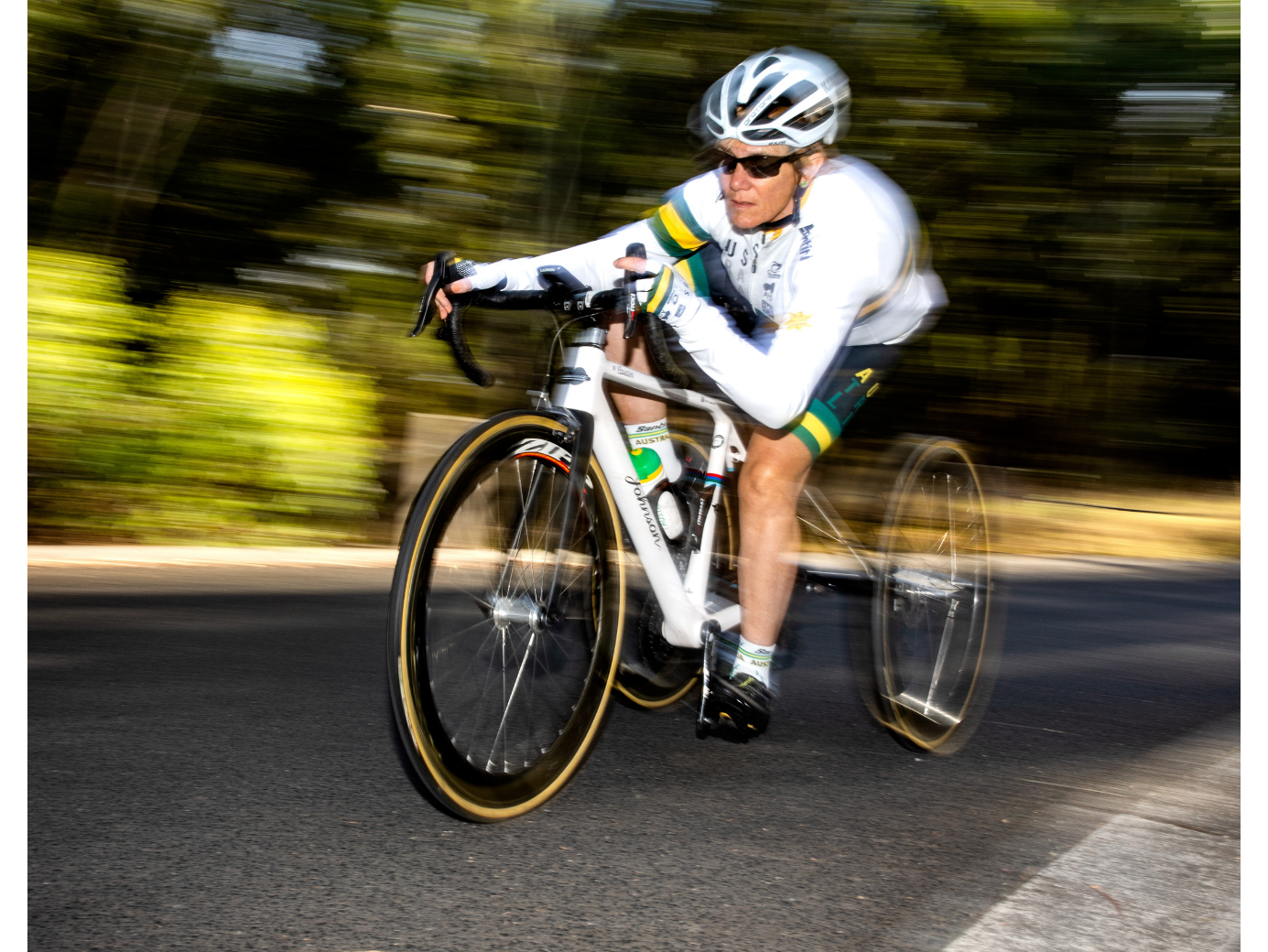
Carol went on to become a paralympic medallist and world champion para cyclist, competing at her first Paralympic Games at age 51 and her last at age 60, racing alongside athletes half her age.
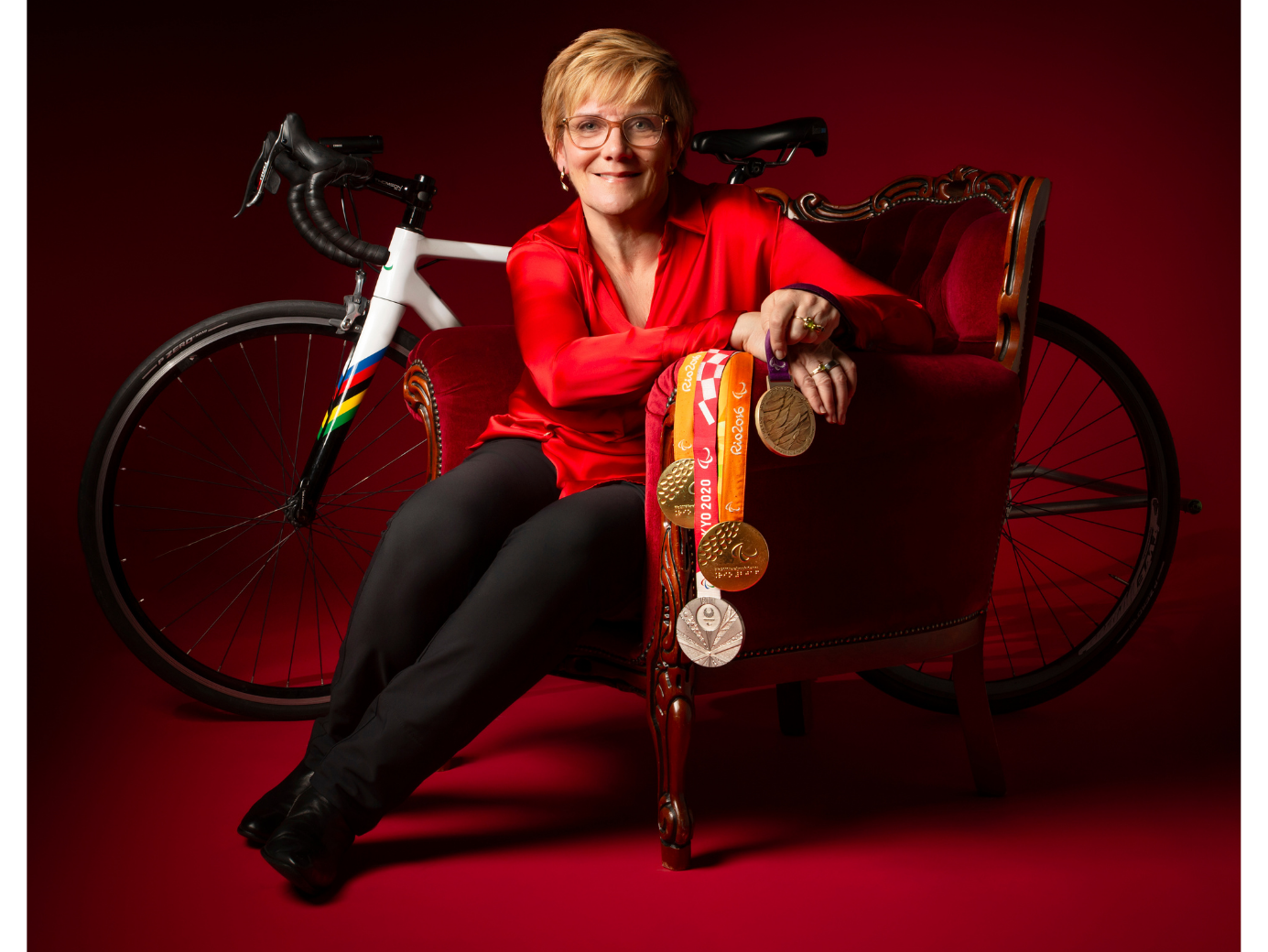
Throughout her journey, Carol’s learned that while MS has changed parts of her life, it’s never defined who she is or what she’s capable of. As she looks ahead, she finds hope not only in her own experiences, but also in the progress being made through MS research.
When Carol thinks about the future of MS research, she feels hopeful. At the time of her diagnosis, there was only one treatment available to slow MS progression. Today, people living with MS have more treatment options than ever before, something Carol has witnessed firsthand.
“I truly do believe that with all the research going on in the world we will find a cause and a cure,” Carol says.
For Carol, supporting MS research means investing in hope for future generations. Every new discovery brings us one step closer to better treatments, improved quality of life and, one day, a world free of MS.
Looking back on nearly three decades of living with MS, Carol believes one of the biggest lessons she’s learned is to never put off the things that matter most.
Reflecting on her journey, she says, “I’ve learned it’s never too late to do anything we want. We should never be defined by a number or the fact that we live with a chronic disease. There are ways around everything. We just have to be open to trying. It took me some time to realize it’s ok to use mobility aids if I need to. I use a walking stick all the time, but more recently, I’ve been using my wheelchair a bit more. It keeps me engaged with life and doing what I want to do.”
After nearly three decades of living with MS, Carol hopes others remember that an MS diagnosis does not define what’s possible.
“MS may change the path you’re on, but it doesn’t have to change who you are or what you’re capable of,” Carol says. “Believe in yourself. You’re stronger than you think, and with the right mindset, support, and determination, you can overcome challenges in your own way and continue to live a meaningful and fulfilling life. There will be difficult days, but it’s ok to have those moments. Give yourself permission to feel disappointed or frustrated, but don’t let those days define you. Get outside, feel the sunshine on your face, and remind yourself that tomorrow is a new day.”

- Log in to post comments