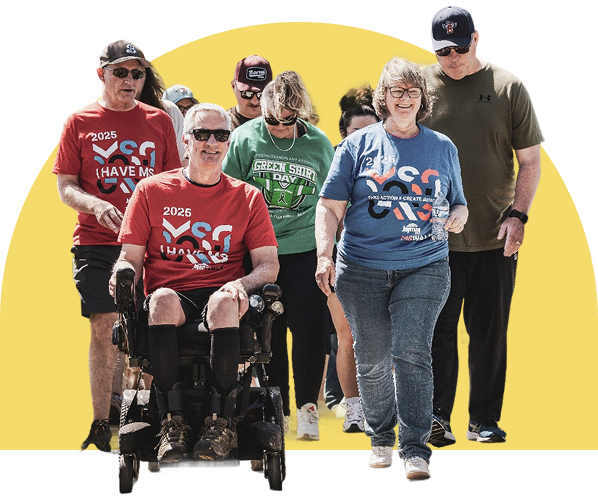
Why Every Moment of Awareness Counts
For many Canadians, the path to an MS diagnosis can take years and be full of uncertainty. Recognizing signs and symptoms of MS early provides a window of opportunity for earlier intervention. Earlier intervention means preserved function, delayed disability and better long-term health outcomes.
When more Canadians understand MS, we help create a world where:
- Stigma decreases as understanding grows, making it easier for people to live fully with MS
- Communities become more accessible and inclusive for people of all abilities
- Research advances faster through increased public support and funding
- No one faces MS alone because informed communities provide better support
Your voice changes everything. Whether you share a fact, start a conversation, or educate your own network, every action helps build a more informed and compassionate Canada.
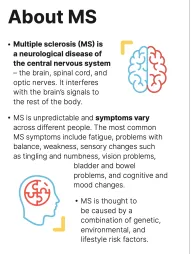
What You Should Know About MS
Understanding MS doesn’t require a medical background. It requires awareness. The more people learn about this disease, the stronger our collective voice becomes: to push for systems that better support those living with MS, and to drive investment in research that truly makes a difference.
Canada
has one of the highest rates of MS globally.
Every 2 hours
a Canadian is diagnosed with MS, on average.
Women
are up 3x more likely to be diagnosed with MS than men.
20–49 years
Age of most new MS diagnoses.
$3.4B+
Annual cost of MS in Canada.
How to Raise Awareness and Make an Impact
Awareness is most powerful when it’s specific, consistent, and connected to action. Below are five ways you can make an impact today.
Share Stories & Information
The most credible source of MS awareness is through people with lived experience. When someone shares what MS looks like in real life - the symptoms, the uncertainty, the day-to-day realities of living with MS - it stays with people in a way statistics alone cannot.
What you can do:
- Share posts and resources from MS Canada's social media channels
- Download the MS Poster, Fact Sheet and Social Media Graphics from our MS Awareness Toolkit
- Share your own MS story, or read stories from our blog and share with your friends and family
- Use hashtags like #MSAwareness and #NavigatingMSTogether to connect your voice to the wider community

Educate Your Community
Education creates understanding and often leads to meaningful support—like workplace accommodations for colleagues with MS or accessibility improvements in your community.
What you can do:
- Share MS facts or a personal story through your workplace or community channels
- Spread awareness in spaces you're already part of — whether that's your office, neighbourhood, or local community

Participate in Events
Events bring visibility to MS, raise funds for critical programs and research, and build community. Whether you walk, ride, volunteer, or cheer from the sidelines, your presence matters.
What you can do:
- Register for MS Walk or MS Bike
- Participate in World MS Day on May 30
- Attend a local community event
- Create and organize your own fundraiser through the We Challenge MS platform

Advocate for Change
Every Canadian affected by MS should have the opportunity to participate fully in all aspects of life. Together, we can make it happen. Advocating for systems and policy changes creates positive change for all Canadians affected by MS.
What you can do:
- Learn how you can #TakeActionforMS and add your name to our petitions or open letters to government
- Register for advocacy updates to stay in the loop

Volunteer Your Time
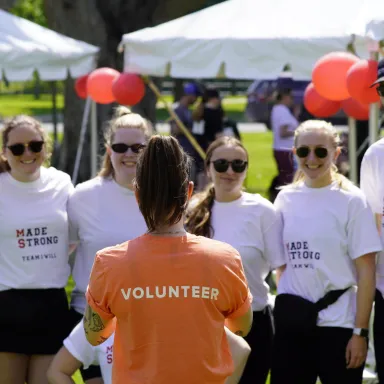
From event volunteers to peer mentors to advocacy champions, there are many ways to contribute. Volunteering also educates you about MS, making you a more informed awareness advocate.
What you can do:
- Learn about volunteering opportunities in your community
Your MS Awareness Toolkit
Everything you need to start raising awareness today. Download free social media graphics, posters and shareable content to start conversations, show solidarity and help more Canadians recognize the early signs of MS.
Click the Download button, then right-click the image and select "Save image as..." to save it to your computer




Real Stories. Real Impact.
Hear from Canadians living with MS about what awareness means to them and how it's changed their journey.

"When I was first diagnosed, I had no idea what multiple sclerosis was"

"It’s always okay to ask for help"
Your Awareness Efforts Create Real Change
Your commitment to awareness drives measurable results. Together, we are funding the future of MS care.
$233 million
invested in MS research since 1948
20,000+ people
affected by MS benefit from our programs annually
While May is the signature month for MS awareness in Canada — culminating in World MS Day on May 30 — the opportunity to make an impact doesn't stop there. Awareness, advocacy, and support are year-round efforts. Keeping MS visible throughout the year means more people reached, more stories shared, and more lasting change.
How Does Awareness Help?
Translating Research Into Answers
While there's currently no cure for MS, research continues to improve the health outcomes of people living with MS today. Every dollar raised and conversation started directly fuels research progress and hope for a world free of MS.
Earlier Diagnosis
The sooner MS is identified, the sooner life-changing disease management strategies can begin. Research is closing the gap between first symptom and diagnosis.
More Effective Treatments
Today's therapies are more precise and better tolerated than a decade ago. And research is making tomorrow's even better.
Understanding Causes
Scientists are getting closer to understanding what triggers MS. Knowledge that could one day make prevention possible.
Quality of Life, Redefined
From fatigue management to mobility support, research is expanding what's possible for people living with MS every day.