- Research
- April 10, 2026
Navigating Crossroads to Accelerate Progress in MS
Research Highlights from the 2026 ACTRIMS Scientific Conference

Each year, the Americas Committee for Treatment and Research in Multiple Sclerosis or ACTRIMS, brings together experts to share the latest discoveries in multiple sclerosis (MS). The meeting highlights research advances that are shaping our understanding of the disease and improving care for people affected by MS.

This year’s theme “MS at a Crossroads” marks an important point in research where our current knowledge of MS and advances in technology is raising important questions about what comes next. The goal of this conference was to set clear paths for future MS research and to answer the questions: How and why does MS start? What are the factors that drive progression?
We covered some of the research updates from ACTRIMS below, including updates on aging and MS, new ways to target the disease, advances in technology, how Epstein-Barr virus (EBV) affects MS, and much more!
Biological Aging in MS
Biological aging refers to how quickly the body ages at a cellular level. This can be different from your actual age in years (chronological age). Some evidence suggests that people with MS may experience faster biological aging compared to their actual age.
Research presented by Dylan Hamitouche (McGill University) found that, on average, people with MS are nearly one year older biologically than those without MS. They found signs of faster biological aging, particularly in brain proteins up to 10 years before MS diagnosis, and this was linked to a higher risk of mortality. These findings suggest that biological age could be a useful biomarker for MS. It may help detect the disease earlier and track its progression more accurately, which could lead to more timely and targeted care for people living with MS. Learn more about this research.
We also want to congratulate Dylan for being awarded the best oral presentation by a Young Investigator at ACTRIMS as well as the European Charcot Foundation Young Investigator Award!
In a separate study, Dr. Ilana Katz Sand (Mount Sinai University) found that people with early MS, who more strictly followed a Mediterranean diet tended to have longer telomere length (a sign of younger biological age) and a lower risk of disability worsening. These findings suggest that diet may be one lifestyle factor that people with MS can modify to support healthier aging. Learn more about this research.

Novel Therapeutic Targets
There’s an urgent need for effective therapies for progressive MS. The following studies highlight new biological pathways and immune cells that researchers are exploring as potential targets to slow or stop disease progression.
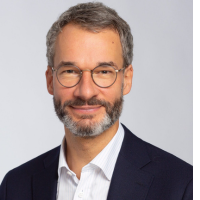
Dr. Manuel Friese (University Medical Center Hamburg-Eppendorf) was awarded the prestigious Barancik Prize for Innovation in MS Research for his work on how inflammation and nerve cell death (also called neurodegeneration) drive progression in MS.
Dr. Friese’s research team discovered that nerve cells release stress signals when exposed to inflammation and over time; this disrupts normal cell functions and contributes to neurodegeneration. They also identified a new molecule (GDF15) that may reduce inflammation in the brain and spinal cord. These findings identify promising new targets that could be further developed into future therapies to protect nerve cells and slow disease progression in MS. Learn more about Dr. Friese’s research contributions here.
Hayley Groover (The Ohio State University) shared an exciting discovery of a group of immune cells called “innate-like clonally expanded (ICE) B cells” that may contribute to MS progression. In aging mice with MS-like disease, these cells accumulated in the central nervous system and produced harmful antibodies that attack myelin, causing inflammation and tissue damage. Similar cells were also found in the cerebrospinal fluid of people with MS, suggesting that they could be targeted to slow or prevent disease progression. Learn more about this research.
Hayley was also awarded the best oral presentation by a Young Investigator at ACTRIMS – Congratulations!
Dr. Valeria Ramaglia (University of Toronto) discussed how targeting complement factor C3, a protein involved in immune responses, can reduce disease progression in mice with MS-like disease. They found evidence that C3 is activated in the brains of people with progressive MS, further supporting its potential as a therapeutic target for MS. Learn more about this research.
MS Treatment and Care

Dr. Jeffrey Cohen (Cleveland Clinic) delivered the Kenneth P. Johnson Memorial Lecture in recognition of his longstanding contributions to MS research and care.
His talk focused on the current landscape and future directions of autologous hematopoietic stem cell transplantation (AHSCT), a treatment that aims to “reset” the immune system using a person’s own stem cells. Previous studies, including the Canadian Bone Marrow Transplant (BMT) trial funded by MS Canada, Halt-MS trial, MIST trial and others, have shown strong results, with 70-95% of participants experiencing no evidence of disease activity following treatment (no relapses, MRI activity, or disability worsening) for up to five years or more.
However, AHSCT carries important risks, including infections and the development of secondary autoimmune conditions. It also appears to work better in younger people with highly active relapsing MS, and may pose greater risks for older adults with progressive disease. While AHSCT is a promising treatment option, it may not be suitable for everyone. Ongoing research is focused on improving how the treatment is done and identifying which people with MS are most likely to benefit from it.
Dr. Lorna Galleguillos Goiry (Clínica Alemana) discussed how MS presents and is managed during menopause, a major hormonal transition for women. Although some women experience worsening of symptoms and greater disability during this time, research suggests that menopause itself may not directly drive MS progression. Instead, factors like aging, lower estrogen levels, and increased risk of bone loss may play a larger role.
During menopause, it’s especially important to take a proactive approach to managing symptoms and staying engaged in rehabilitation. In some cases, hormone replacement therapy may also be considered to manage menopausal symptoms (i.e., bone density loss, hot flashes), after carefully weighing potential risks and benefits.
Dr. Amit Bar-Or (University of Pennsylvania) shared findings from MoonStone, the first phase 2 clinical trial testing obexelimab, a drug that blocks B cell activity, in people with relapsing-remitting and active secondary progressive MS. Compared with placebo (no active drug), obexelimab significantly reduced the number of active and new or enlarging brain lesions, with no new safety concerns reported. These results support the continued development of obexelimab as a potential new treatment for MS. Learn more about this research.
Researchers also shared results from clinical trials studying Bruton tyrosine kinase inhibitors (BTKi) for primary progressive MS (PPMS). Dr. Robert Fox (Cleveland Clinic) shared findings from PERSEUS, a phase 3 trial comparing the BTKi tolebrutinib with placebo. Although the trial did not meet its primary goal of slowing disability progression, participants receiving tolebrutinib showed fewer new and enlarging brain lesions and experienced less brain volume loss compared to placebo. Learn more about this research.
In a separate study, Dr. Amit Bar-Or (University of Pennsylvania) presented FENtrepid phase 3 trial results comparing another BTKi, fenebrutinib, with ocrelizumab, currently the only approved treatment for PPMS. They found that fenebrutinib was slightly more effective than ocrelizumab in slowing disability progression and improving upper limb function in people with PPMS. These results suggest that fenebrutinib has the potential to become an oral treatment option for MS, that acts directly in the brain to target the underlying biology of progression. Learn more about this research.
Technological Advances in MS
Dr. Gianmarco Belluci (University of California San Francisco) presented a new artificial intelligence tool called MedCP. The tool links health records with biomedical data, letting researchers ask questions in everyday language and get clear, reliable results. Using MedCP, Dr. Belluci’s team explored the MS prodrome. They identified migraine as a common prodromal condition occurring within five years before someone’s MS diagnosis. The tool also linked migraines to specific genes and biological pathways, helping researchers understand the potential biological mechanisms involved. By connecting real-world data on people living with MS with biological insights, tools like MedCP can allow researchers to analyze large amounts of data much faster, helping to accelerate discoveries that could feed into better treatments for people living with MS. Learn more about this research.
Dr. Sean Deoni (Gates Foundation) presented advances in portable magnetic resonance imaging (MRI), which is a smaller and less expensive device that can be transported directly to where people are located. There are limitations to this technology, including lower image resolution, longer scan times, and brain-only imaging, but portable MRI has strong potential to make disease monitoring more accessible for people in rural and underserved communities and help ensure fair access to MS care.
Implications of EBV in MS
To date, EBV is considered the strongest known environmental risk factor for MS. Dr. Micah Luftig (Duke University) summarized what we currently know about EBV’s role in MS and key questions that remain to guide EBV-targeted strategies to prevent or treat the disease. Dr. Luftig highlighted these priority research questions: (1) where in the body is EBV most active in people with MS; (2) which EBV-infected B cells are driving the disease; and (3) what triggers EBV to reactivate in MS?
Dr. Dalia Rotstein (University of Toronto) presented findings from an MS Canada funded study looking at the timing between EBV infection and MS onset. Using population-based health data from Ontario, Canada, the team discovered a small group of 74 people with MS whose EBV infection happened years after their MS diagnosis. More research is needed to understand these findings, particularly if this was a result of a misdiagnosis, misclassification of EBV infection, or reactivation of a previous EBV infection. Understanding when and how EBV is involved in MS could help inform future prevention strategies and treatments for MS. Learn more about this research.
Our overview is just a sneak peek at the latest breakthroughs in MS research presented at ACTRIMS 2026. For more information, you can explore the ACTRIMS abstract catalog.


- Log in to post comments