- Research
- December 3, 2025
Celebrating Advancements and Innovation in MS Research
Research Highlights from ECTRIMS 2025

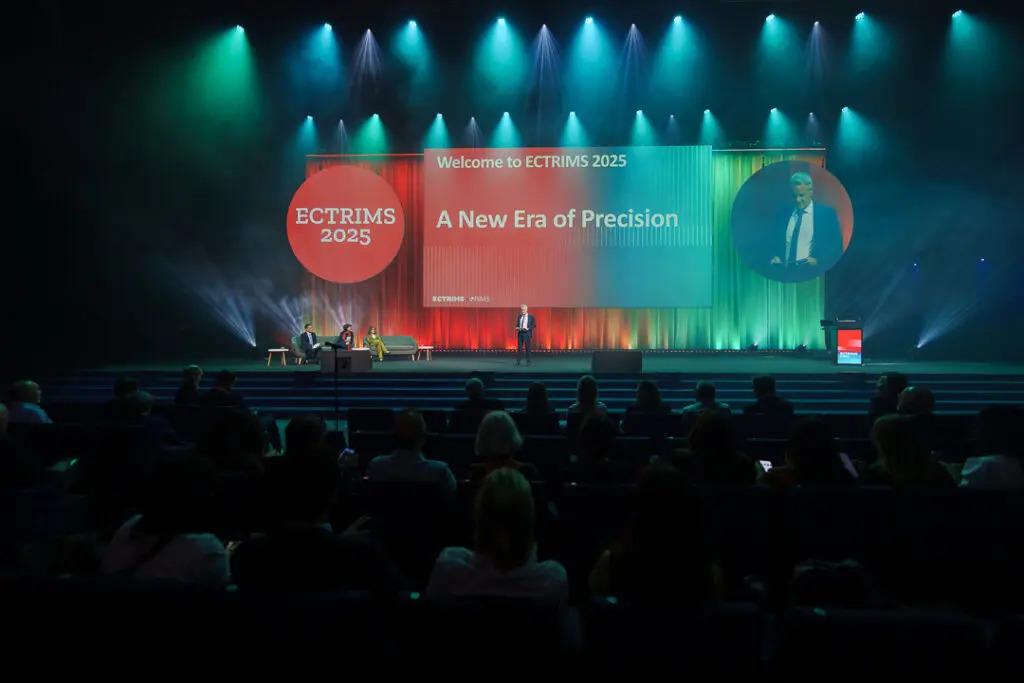
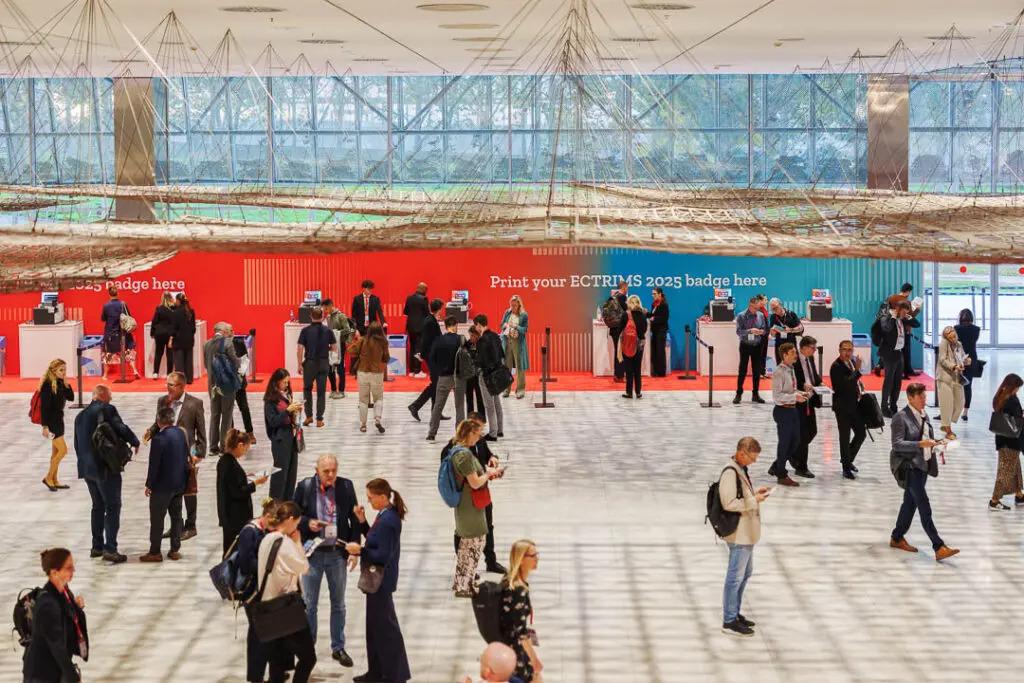
ECTRIMS – the European Committee for Treatment and Research in Multiple Sclerosis – hosted its 2025 scientific conference in Barcelona, Spain. The conference aims to support global collaboration, showcase groundbreaking MS research, and spark conversations across different scientific fields. This year, more than 9,600 participants across 120 countries joined onsite and online.
The conference featured topics like advances in MS treatments, emerging therapies, as well as lifestyle and wellness factors. We’re excited to share some of the research highlights below!
Advances in MS Treatments
Results from Ocrelizumab Trials
Several talks highlighted how ocrelizumab benefits people with MS from diverse backgrounds and disease experience. Dr. Gavin Giovannoni (Queen Mary University of London, UK) talked about the O’HAND trial, an expansion of the original study that helped establish ocrelizumab as a treatment option for people with primary progressive MS (PPMS). The new trial showed that ocrelizumab was also effective in delaying disability progression and improving upper limb function in older people with PPMS (up to 65 years) with more advanced disability (including wheelchair users). These findings bring hope to people with more advanced MS where improvements in hand and arm function could mean more independence and better quality of life. Learn more from Dr. Giovannoni’s presentation.
Dr. Brenda Banwell (Johns Hopkins, USA) shared new data showing that ocrelizumab was both well tolerated and effective in reducing relapses in children and youth with MS. Dr. Banwell also reported that compared to fingolimod (approved treatment for pediatric-onset MS), participants treated with ocrelizumab were able to fully recover from their relapse. These results are encouraging because there are limited treatment options available for children living with MS. Learn more about Dr. Banwell’s presentation.
Treatments in Development
Dr. Jiwon Oh (St. Michael’s Hospital, Canada) shared results from a phase 2 trial involving the Bruton’s Tyrosine Kinase inhibitor, fenebrutinib. The study showed that for participants with relapsing MS who remained on fenebrutinib for over two years, their disease activity was almost completely stopped. The participants also had decreased levels of serum neurofilament light chain (sNFL; a marker of nerve cell damage) to about the same levels as in people without the disease. Several phase 3 trials are underway to examine the long-term safety and effectiveness of fenebrutinib. Learn more about the fenebrutinib trial results.
Dr. Nick Cunniffe (University of Cambridge, UK) spoke about leading a remyelination trial testing whether the diabetes drug, metformin, in combination with antihistamine, clemastine, could help repair myelin. After 6 months of treatment, his team found a small but significant improvement in myelin repair in people with relapsing-remitting MS (RRMS), measured by how quickly the nerve signals travel from the eyes to the brain – called visual evoked potential latency. However, the treatment did not lead to clinical benefits in symptoms like disability or vision in the study participants. These results suggest that longer-term remyelination studies may be needed to see significant clinical benefits. Learn more about Dr. Cunniffe’s presentation.
Well-being in MS
Cognitive Health
Professor Maria Pia Amato (University of Florence, Italy) opened the conference by reflecting on our current understanding of cognition in MS. Dr. Amato pointed out that nearly half of people living with MS, experience some type of cognitive issue. She shared that cognitive dysfunction is one of the most important invisible symptoms of MS, with significant impacts on daily life, disease management, and social interactions. She urged the research and clinical communities to prioritize cognitive health by making cognitive monitoring part of routine MS care and clinical trials, advancing cognitive rehabilitation methods, and using digital tools and biomarkers to help detect cognitive decline in people with MS. Learn more about Dr. Amato’s lecture.
Exercise and Remyelination
Research has shown that exercise improves mobility, mood, and fatigue in people with MS, but there’s still limited understanding on the underlying biological benefits of exercise. Dr. Lindsey Wooliscroft (Oregon Health & Science University, USA) presented findings from a pilot clinical trial showing that aerobic exercise led to measurable increases in myelin repair in specific brain regions of people living with MS. These findings provide crucial biological evidence that help explain the benefits of exercise in MS. Learn more about the study results.
Future of MS Rehabilitation
Dr. Tobias Nef (University of Bern, Switzerland) talked about applying virtual reality technology in MS rehabilitation to help with training for daily tasks like cooking and to improve balance, cognition, and mental health in people with MS. Other digital tools, like mobile apps, software, and wearable devices, can also be included in MS rehabilitation.
Dr. Andrea Tacchino (Italian Multiple Sclerosis Foundation, Italy) discussed the potential use of these tools in collecting patient-generated data to help with earlier diagnosis, monitor outcomes of rehabilitation activities, and inform treatment and care decisions. The researchers note that these are emerging technologies with limited evidence in MS, so more research is needed in this area.
Diet and MS
A number of presentations highlighted the importance of diet in managing MS alongside standard treatments. Dr. Gloria Dalla Costa (Harvard University, USA) reported that high consumption of ultra processed foods (e.g., foods rich in preservatives and artificial ingredients) was associated with higher rates of relapses and larger active lesions in people with clinically isolated syndrome. Learn more about Dr. Dalla Costa’s presentation.
Dr. Maggie Yu (University of Melbourne, Australia) also shared that adhering to the MIND diet, which is known for its neuroprotective benefits, was linked to long-term reductions in disability and fatigue in people with MS. Learn more about the study results.
Advances in MS Diagnosis
Dr. Christine Lebrun-Frenay (Centre Hospitalier Universitaire de Nice, France) summarized the updates to the recently published 2024 McDonald Criteria, which was meant to provide healthcare professionals with more ways to diagnose MS more quickly and accurately. Drs. Luca Bollo (Vall d’Hebron University Hospital, Spain) and Wallace Brownlee (University College London, UK) applied the updated criteria to their own participant group, which resulted in higher rates of MS diagnosis and a much faster diagnostic timeline. Learn more about the real-world applications of the 2024 McDonald Criteria.
Our overview only captures a few of the latest breakthroughs in MS research presented at ECTRIMS 2025. Make sure to check out key takeaways from each day of the conference on the ECTRIMS podcast.
You can also watch live recordings of the Patient Community Day 2025 session.
More Stories You May Like


- Log in to post comments